
How to Stay Nutritionally Balanced on a Busy Schedule
Time is the one resource most people feel they never have enough of, and eating well is often the first thing that gets sacrificed when life gets hectic. But staying nutritionally balanced on a busy schedule is absolutely possible — it just requires a bit of strategy and some upfront planning.
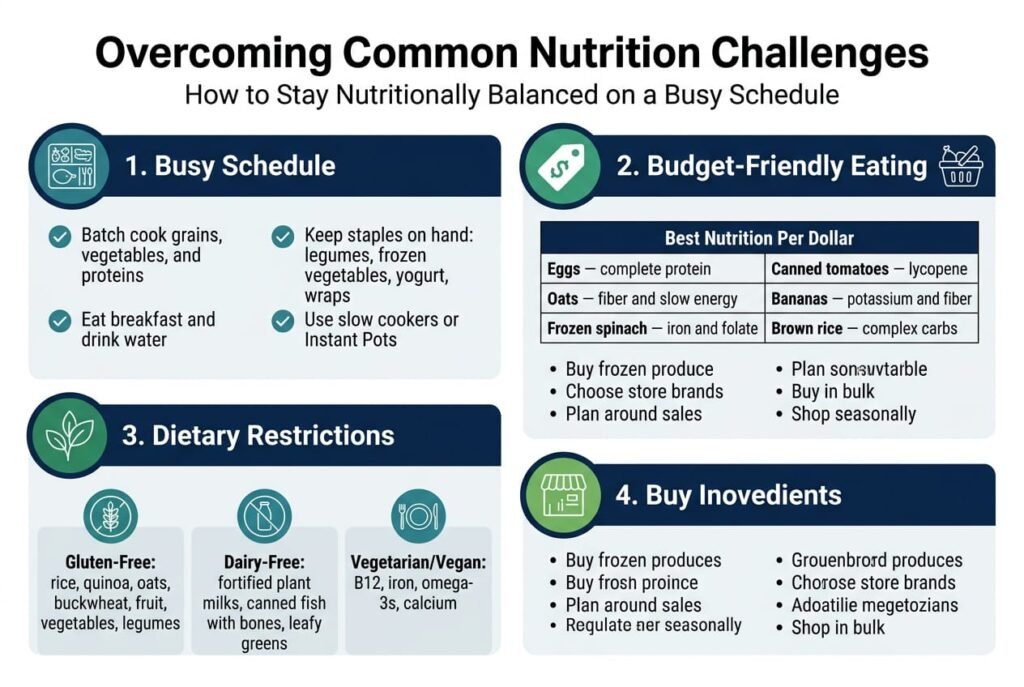
Batch Cooking Is Your Best Friend
Spending two to three hours on a Sunday (or whichever day works for you) preparing meals for the week ahead can completely transform how you eat Monday through Friday. Cook a big pot of grains like brown rice or quinoa, roast a sheet pan of vegetables, and prep two or three protein sources — grilled chicken, boiled eggs, or cooked lentils work great. Mix and match throughout the week so meals never feel repetitive.
Keep Quick Nutrition Staples on Hand
Stock your kitchen with foods that require zero or minimal preparation:
- Canned legumes (chickpeas, black beans, lentils) — rinse and toss into anything
- Frozen vegetables — just as nutritious as fresh and ready in minutes
- Nut butters — protein and healthy fat without any prep
- Greek yogurt — high in protein and grab-and-go ready
- Pre-washed bagged salad greens — instant base for a balanced meal
- Whole grain wraps or bread — fill with whatever protein and veggies you have
Smart Habits for Busy Days
- Eat breakfast — even something small like a banana with peanut butter keeps your energy steady and prevents overeating later
- Carry a water bottle everywhere — dehydration often masquerades as hunger
- Keep healthy snacks in your bag, desk, or car so vending machines never become the default
- Use a slow cooker or Instant Pot; you prep in the morning and dinner is ready when you get home
Budget-Friendly Ways to Eat Healthy Every Day
Healthy eating has a reputation for being expensive, but that reputation is largely undeserved. Some of the most nutritious foods on the planet are also the cheapest. The key is knowing where to spend and where to save.
Foods That Deliver Maximum Nutrition Per Dollar
| Food | Why It’s Worth It | Average Cost |
| Dried lentils | High protein, fiber, iron | Very low |
| Canned sardines | Omega-3s, protein, calcium | Low |
| Eggs | Complete protein, vitamins | Low |
| Oats | Fiber, magnesium, slow-release energy | Very low |
| Frozen spinach | Iron, folate, vitamin K | Low |
| Canned tomatoes | Lycopene, vitamin C | Very low |
| Bananas | Potassium, quick energy, fiber | Very low |
| Brown rice | Complex carbs, B vitamins | Very low |
Practical Strategies to Cut Costs Without Cutting Quality
- Buy frozen produce — it’s picked at peak ripeness and flash-frozen, locking in nutrients. It’s often cheaper than fresh and has a much longer shelf life
- Choose store brands — the nutritional profile on a store-brand canned bean versus a premium branded version is essentially identical
- Plan meals around what’s on sale — build your weekly menu after checking the store flyer, not before
- Buy in bulk when it makes sense — whole grains, nuts, seeds, and dried legumes store well and cost significantly less per serving in bulk
- Reduce meat but don’t eliminate protein — swapping one or two meat-based meals per week for lentil, bean, or egg-based dishes cuts costs dramatically
- Limit highly processed convenience foods — they seem cheap upfront but deliver poor nutrition and often cost more per calorie than whole foods
- Shop seasonally — produce that’s in season locally is almost always cheaper and fresher
A Sample Budget-Friendly Weekly Grocery Framework
- Proteins: Eggs, canned fish (tuna, sardines), dried or canned legumes, chicken thighs (cheaper than breasts)
- Carbohydrates: Oats, brown rice, whole grain bread, sweet potatoes
- Vegetables: Frozen mixed vegetables, canned tomatoes, fresh cabbage, carrots, onions
- Fruits: Bananas, apples, whatever is in season
- Extras: Olive oil, garlic, herbs and spices (dried versions are affordable and go a long way)
Navigating Nutritional Needs with Dietary Restrictions
Whether you’re managing a food allergy, following a specific diet for health reasons, or choosing to eat a certain way for ethical or cultural reasons, eating well with dietary restrictions requires a bit more awareness — but it’s far from impossible.
Common Dietary Restrictions and How to Meet Key Nutritional Needs
Gluten-Free Diets
People with celiac disease or non-celiac gluten sensitivity need to avoid wheat, barley, and rye. The concern is that many gluten-free packaged products compensate for texture by adding extra sugar and fat, making them nutritionally inferior to their whole-food counterparts.
Focus on naturally gluten-free whole foods:
- Rice, quinoa, oats (certified gluten-free), buckwheat, millet, corn
- All fruits and vegetables
- Legumes, meat, fish, eggs, and dairy
Watch out for hidden gluten in sauces, dressings, soups, and processed meats.
Dairy-Free Diets
The two main concerns are calcium and vitamin D. These can be addressed through:
- Fortified plant milks (almond, oat, soy — soy has the closest protein profile to cow’s milk)
- Canned fish with bones (salmon, sardines) for calcium
- Leafy greens like kale, bok choy, and broccoli
- Fortified orange juice
- Vitamin D from sunlight and supplementation if needed
Vegetarian and Vegan Diets
Plant-based eaters need to pay close attention to:
| Nutrient | Why It Matters | Plant-Based Sources |
| Vitamin B12 | Nerve and blood health | Fortified foods, supplementation |
| Iron | Energy, oxygen transport | Lentils, tofu, seeds, fortified cereals |
| Omega-3 fatty acids | Heart and brain health | Flaxseeds, chia seeds, walnuts, algae oil |
| Calcium | Bone health | Fortified milks, kale, almonds, tofu |
| Zinc | Immune function | Legumes, nuts, seeds, whole grains |
| Protein | Muscle, repair, enzymes | Legumes, soy, seitan, quinoa, tempeh |
Combining foods — like rice and beans — throughout the day ensures you’re getting all essential amino acids.
Food Allergies (Nuts, Soy, Shellfish, Eggs, etc.)
Cross-contamination is a real risk beyond just avoiding the allergen itself. Always:
- Read labels carefully, including “may contain” warnings
- Communicate clearly when eating out — ask specifically about shared cooking surfaces and oils
- Learn the many names your allergen might appear under on ingredient lists (for example, soy can appear as edamame, miso, tempeh, or tofu)
How to Spot and Avoid Misleading Nutrition Myths
Nutrition misinformation is everywhere — social media feeds, wellness blogs, podcast ads, and even well-meaning friends all spread myths that can genuinely derail your health goals. Learning how to cut through the noise is one of the most valuable nutrition skills you can develop.
Red Flags That Should Make You Skeptical
- “This one food will transform your health” — No single food has magical powers. Nutrition is about overall patterns, not individual superfoods.
- “Cut out this entire food group” — Eliminating whole categories of food (carbohydrates, fats, grains) without a medical reason is rarely necessary and can create imbalances.
- “Doctors don’t want you to know this” — This framing is a classic manipulation tactic designed to make dubious advice seem exclusive or suppressed.
- Celebrity or influencer endorsements — Fame and Instagram followers have nothing to do with nutrition expertise.
- Before-and-after testimonials — These are marketing tools, not scientific evidence.
- Products sold alongside the advice — When someone is selling a supplement, detox kit, or program tied to their nutrition claim, that’s a massive conflict of interest.
Common Nutrition Myths — Debunked
| Myth | The Reality |
| Carbs make you fat | Excess calories cause weight gain, not carbohydrates specifically |
| Fat is bad for you | Healthy fats (avocado, olive oil, nuts) are essential for brain and heart health |
| Eating late at night causes weight gain | Total daily calorie intake matters more than timing for most people |
| Detox diets cleanse your body | Your liver and kidneys do this naturally — no juice cleanse required |
| High-protein diets damage your kidneys | In healthy individuals, higher protein intake poses no kidney risk |
| You need to eat every 2-3 hours to boost metabolism | Meal frequency has minimal impact on metabolic rate for most people |
| Brown sugar is healthier than white sugar | They are nutritionally almost identical |
| Fresh produce is always more nutritious than frozen | Frozen produce is often picked at peak nutrition and can be equally or more nutritious |
How to Evaluate a Nutrition Claim
Before believing or sharing any nutrition claim, run it through these questions:
- Who is saying it? Is this a registered dietitian, a nutrition researcher, or someone selling a product?
- What’s the evidence? Is it backed by multiple peer-reviewed studies or just one small study (or no study at all)?
- Does it sound too good to be true? Dramatic promises — rapid weight loss, cancer cures, instant energy — are almost always oversimplified or flat-out false.
- Is it asking you to eliminate something major? Healthy nutrition guidance rarely demands radical restriction.
- Does the source profit from your belief? Follow the money.
The most reliable sources of nutrition information include registered dietitians (RDs), public health organizations, and peer-reviewed research from established journals. When in doubt, cross-reference across multiple credible sources before making any significant changes to how you eat.
[…] 9. Aging […]