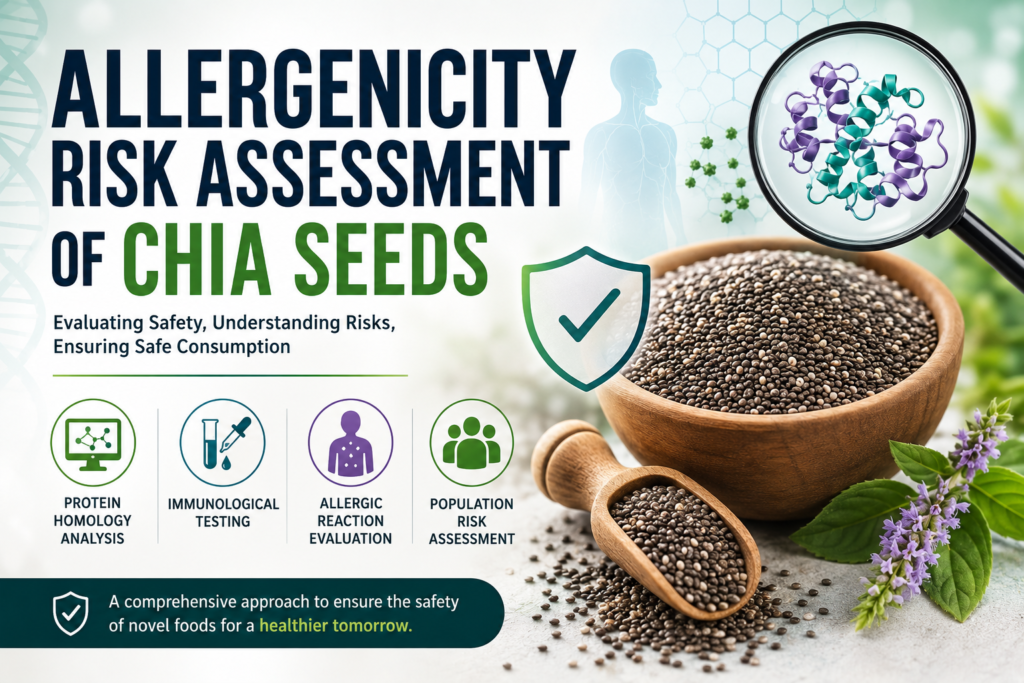
The allergenicity of novel foods, including chia seeds (Salvia hispanica L.), is a critical factor in ensuring their safety for human consumption. Allergic reactions to food proteins occur when the immune system erroneously identifies certain proteins as harmful, triggering an immune response (Gargano et al., 2021). Although Allergic reactions to food proteins occur when the immune system erroneously identifies certain proteins as harmful, triggering an immune response (Vojdani et al., 2020). Assessing the allergenicity of chia seeds involves a multi-faceted approach that combines bioinformatics, laboratory testing, clinical studies, and population-specific evaluations.
Protein Homology Analysis
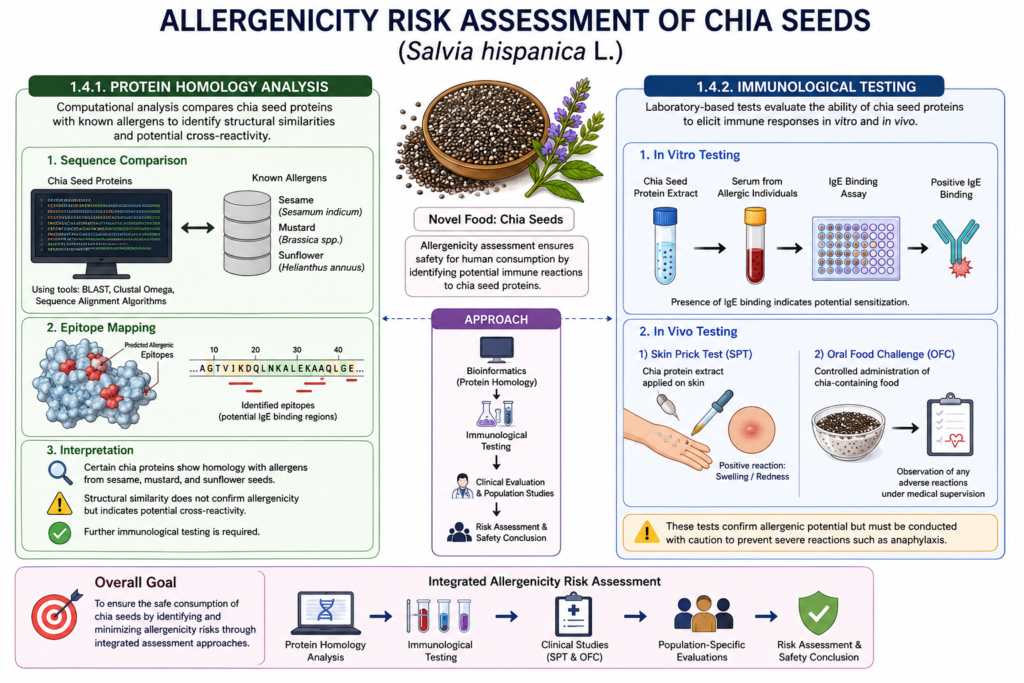
Protein homology analysis serves as an initial step in the allergenicity risk assessment of chia seeds. This computational approach compares the amino acid sequences of chia proteins with those of known allergens to identify structural similarities and potential cross-reactivity (Albunni et al., 2019). Tools such as sequence alignment algorithms and epitope mapping are employed to pinpoint allergenic epitopes, which are specific regions of proteins recognized by the immune system.
Research findings suggest that certain chia seed proteins exhibit sequence homology with allergens present in sesame (Sesamum indicum), mustard (Brassica spp.), and sunflower (Helianthus annuus) seeds (Kotecka-Majchrzak et al., 2020). For instance, similarities in conserved protein domains have raised concerns about the likelihood of cross-reactivity in individuals allergic to these seeds. While the structural similarity alone does not confirm allergenicity, it underscores the need for further testing to assess the sensitization potential of these proteins.
Immunological Testing
To complement bioinformatic predictions, laboratory-based immunological testing provides direct evidence of allergenic potential. These tests evaluate the ability of chia seed proteins to elicit immune responses in vitro (in controlled laboratory conditions) and in vivo (in living organisms) (Mishima, 2023c).
- In Vitro Testing
In vitro assays, such as serum IgE-binding studies, involve exposing human serum samples from allergic individuals to chia seed proteins (Villa et al., 2024a). The presence of IgE binding indicates potential sensitization. These assays are crucial for identifying proteins that can trigger immune responses, particularly in individuals with pre-existing allergies to structurally similar proteins. - In Vivo Testing
In vivo methods, such as skin prick tests (SPTs) and oral food challenges (OFCs), are utilized to confirm allergenic reactions (Lieberman & Sicherer, 2011).- In SPTs, chia protein extracts are applied to the skin, and an allergic reaction is determined based on localized swelling or redness.
- OFCs involve the controlled administration of chia-containing foods to individuals under medical supervision to observe any adverse reactions.
These tests are critical for confirming allergenic potential but must be conducted with caution to prevent severe reactions, such as anaphylaxis.