The life is based on amino acids. These are little particles that tie together to form the proteins that are the fundamental blocks of life, on the one hand, and are responsible for several functions in the human body on the other hand. It is safe to say that protein, because of is so important, is one of the amino acids that are responsible for muscle growth, too. Not the whole but the amino acids, which are similar to the building blocks of life represent the structure of the so-called galactic-factories in the universe.
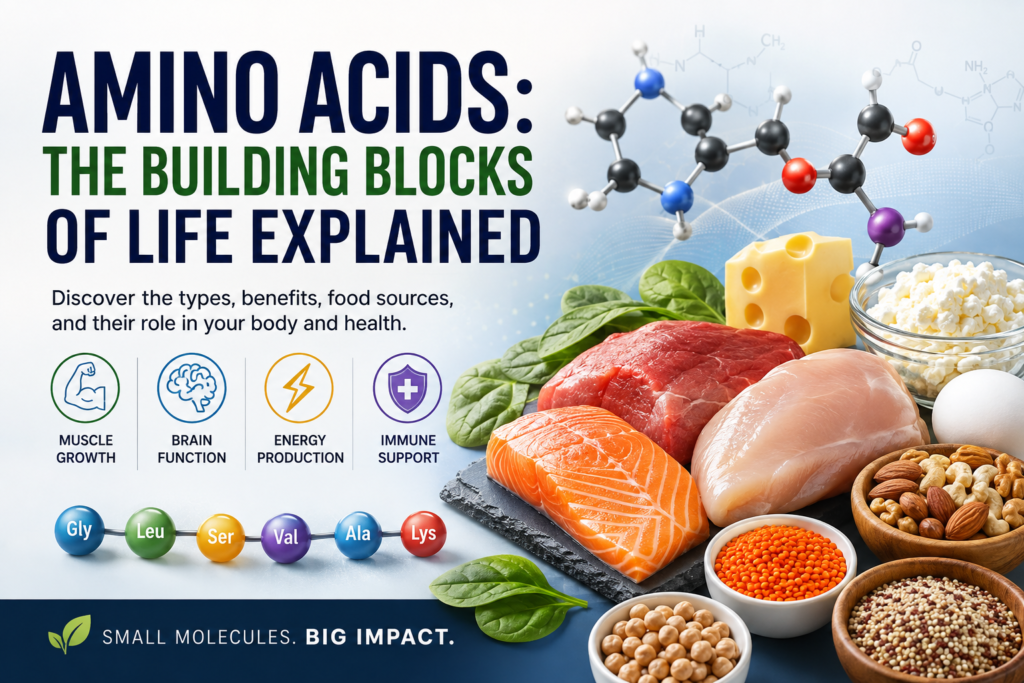
In this article, we’ll explore:
✔ What amino acids and why do they matter
✔ The 20 different types of amino acids
✔ Essential vs non-essential amino acids
✔ How amino acids affect muscle growth, brain function, and metabolism
✔ Best dietary sources of amino acids
What Are Amino Acids?
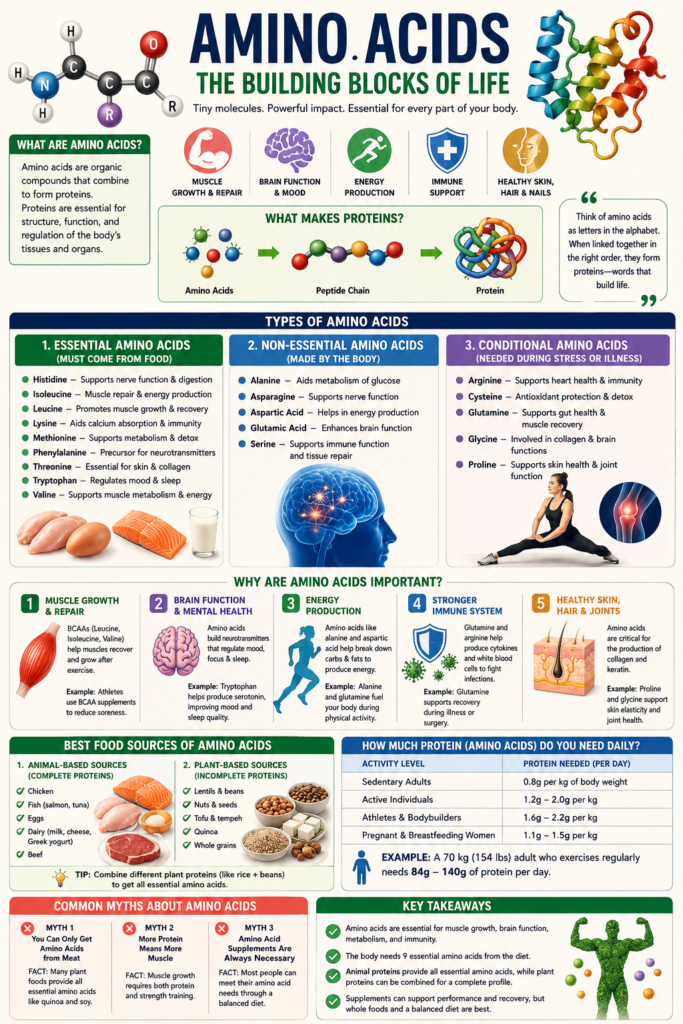
Amino acids are organic compounds that contain carbon, hydrogen, oxygen, and nitrogen. They are the chemical components that join together to form proteins, which are necessary for almost every biological process.
There are 20 different amino acids and the interaction of amino acids produces the form and function of the proteins in the body.
Imagine amino acids as if they were letters in the alphabet. Similar to letters being put together to create words, amino acids can be linked in series to form proteins of various functions.
Types of Amino Acids
Amino acids are divided into three main categories:
1. Essential Amino Acids (Must Come from Food)
The body cannot produce these amino acids, so they must come from the diet.
✔ Histidine – Supports nerve function and digestion
✔ Isoleucine – Helps with muscle repair and energy production
✔ Leucine – Promotes muscle growth and recovery
✔ Lysine – Aids in calcium absorption and immune function
✔ Methionine – Supports metabolism and detoxification
✔ Phenylalanine – Precursor for neurotransmitters (dopamine, epinephrine)
✔ Threonine – Essential for skin and collagen production
✔ Tryptophan – Helps regulate mood and sleep (serotonin production)
✔ Valine – Supports muscle metabolism and energy balance
2. Non-Essential Amino Acids (Made by the Body)
These are the amino acids that the body can create on its own and do not necessarily need to come from food.
✔ Alanine – Aids metabolism of glucose
✔ Asparagine – Implies the formation of the action potential of a nerve
✔ Aspartic acid – A captivate the energy production
✔ Glutamic acid – Steps up brain function
✔ Serine – Embodies both immune function and
3. Conditional Amino Acids (Needed During Stress or Illness)
Generally, these types of amino acids are non-essential, but during periods of stress, illness, or injury they turn essential.
✔ Arginine – Assists in cardiac health and immune system functioning
✔ Cysteine – Enhances bugs elimination and antioxidant protection
✔ Glutamine – Boosts cell gut and muscle recovery
✔ Glycine – One of its roles is in the collagen-making process and the other is related to the brain
✔ Proline – Talks about how it is healthy for the skin and how it provides proper functionality to your joints
Why Are Amino Acids Important?
Amino acids not only produce proteins but also take place in all major functions of the human body, for example:
1. Muscle Growth and Repair
Amino acids specifically branched-chain amino acids (BCAAs) such as leucine, isoleucine, and valine are those that are accountable for the process of muscle recovery and growth after working out.
BCAA supplements are an Example: Athletes always go for supplements like athletes often take BCAA supplements to decrease muscle soreness.
2. Brain Function and Mental Health
Amino acids are the building blocks of brain-signaling chemicals, namely neurotransmitters.
Example: Tryptophan is the only thing that forms serotonin, bringing balance to your mood and sleep.
3. Energy Production
Specifically, aspartic acid and alanine are the amino acids that aid the human body in carbohydrates and fats being decomposed so that they can be used by the body as fuel.
Example: As a source of energy for physical activities, the body relies on glutamine and alanine.
4. Stronger Immune System
Some of the amino acids like glutamine and arginine act as the components of cytokines that lead to the formation of white blood cells that protect the body from infections.
Example: One of the effects of surgery or illness, glutamine
Collagen makes up one-third of the body’s total protein content and is primarily found in the skin, bones, muscles, and tendons.
What Are the Best Food Sources for Amino Acids In Your Diet?
Amino acids come from both animal and plant sources but the fact that animal-based foods contain all the essential amino acids and, thus, are complete proteins provides them a nutritional edge.
1. Animal-Based Sources (Complete Proteins)
✔ Chicken
✔ Fish (salmon, tuna)
✔ Eggs
✔ Dairy (milk, cheese, Greek yogurt)
✔ Beef
2. Plant-Based Sources (Incomplete Proteins)
✔ Lentils and beans
✔ Nuts and seeds
✔ Tofu and tempeh
✔ Quinoa
✔ Whole grains
Tip: The mixing of various plant proteins, (such as a combination of rice + beans) is suitable for acquiring you all essential amino acids.
How Many Amino Acids Do You Need Daily?
The Recommended Daily Intake (RDI) of protein ensures your body gets enough amino acids.
| Activity Level | Protein Needed (Per Day) |
| Sedentary Adults | 0.8g per kg of body weight |
| Active Individuals | 1.2g – 2.0g per kg |
| Athletes & Bodybuilders | 1.6g – 2.2g per kg |
| Pregnant & Breastfeeding Women | 1.1g – 1.5g per kg |
✔ Example: A 70 kg (154 lbs) adult who exercises regularly needs 84g – 140g of protein per day.
Common Myths About Amino Acids
Myth 1: You Can Only Get Amino Acids from Meat
Fact: In fact, some plant foods are still the storehouses of all essential amino acids such as quinoa and soy products.
Myth 2: More protein means more muscle
Fact: Muscle growth is only achievable with both protein and strength training.
Myth 3: Amino Acid Supplements Are Always Necessary
Fact: The overwhelming majority of people can achieve their amino acid goals
Key Takeaways
Amino acids are fundamental elements for muscle growth, brain cognitive functions, metabolism, and immunity.
✔ Human organisms require nine essential amino acids from the diet.
✔ Animal proteins supply all the essential amino acid variations while plant proteins can be fused in the proper ratio to reach that balance.
✔Amino acid supplements can assist in exceeded sports recovery, improved mental health, and enhanced immune response, nevertheless, a well-balanced diet remains the best source.