
Carbohydrates are the three macronutrients necessary for the proper human body operating together with proteins and fats. They are the main energy source of the human body, which is used to power all activities, from simple daily schedules to strenuous workout sessions.
However, are carbohydrates really important and how do they function in the body? What exactly happens in the body when we ingest them? And how do they influence our metabolism?
This post is going to involve:
✔ What are carbohydrates, its types and applications
✔ How our body converts food into energy
✔ The function of insulin in glucose insensitivity
✔ The better and worse carbohydrates: Which to eat
✔ How reduced intake of carbs can lead to better metabolism
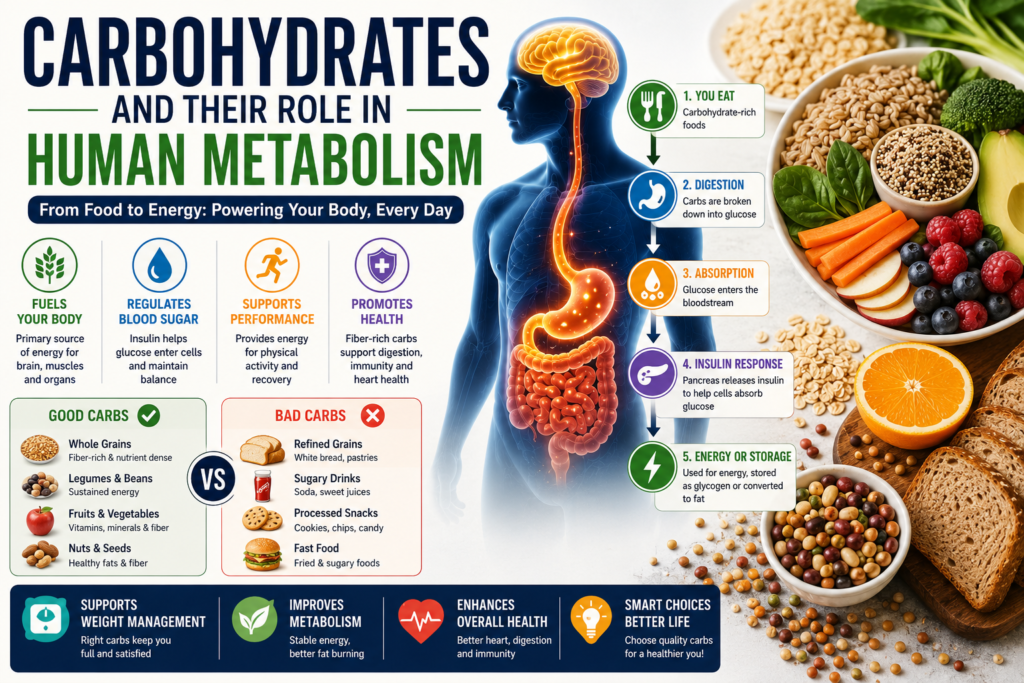
What Carbohydrates Are?
Carbohydrates are a great way to add more of the building blocks of life to your body.
Carbohydrates are made up of carbon, hydrogen, and oxygen molecules. These are present in food items such as fruits, vegetables, grains, and dairy products.
The glycaemic index (GI) is a scale from 0 to 100 that lets you know how fast a particular food turns into sugar in your blood Carbohydrates are the body’s because they are quickly broken down into glucose which in turn fuels cells and organs.
The Kinds of Carbohydrates
Three main categories of carbohydrates exist, including:
1️ Simple Carbohydrates (Sugars) – One can feel a big energy and it is consumed immediately but also makes breathing difficult if your blood sugar is too high
2 High-grade Starches and Carbohydrates (starches and fibers) – This alludes to their slow energy release that in turn activates metabolism.
3️ Fiber (Non-digestible Carbs) – Inhibits the habitually used non-beneficial paths, which consequently strengthens the capability of the microflora.
How Carbohydrates Are Metabolized in the Body
Step 1: Digestion and Absorption
When you eat carbohydrates, digestion begins in the mouth with the enzyme amylase, which starts breaking down starches into sugars.
✔ In the Stomach: Carbs are together with the digestive enzymes.
✔ In the Small Intestine: Carbs will be broken into glucose, fructose, and galactose.
✔ Absorption: Glucose is applied in the bloodstream and then is sent to cells for energy.
Step 2: Glucose and Energy Production
Once absorbed, glucose is either stored, used as energy, or converted to fat.
✔ Immediate Energy – This is the first one to be used as a transportation form for tissues to walk, think, or exercise uptake.
✔ Stored as Glycogen – Is the storage of the liver and muscles for it to be released later on.
✔ Converted to Fat – When there is too much glucose the body stores this.
The Role of Insulin in Carbohydrate Metabolism
Insulin is a hormone that is secreted by the pancreas in reaction to the degree of blood sugar that increases after the eating of carbs at dinner.
✔ Insulin helps glucose enter cells only to be used as energy.
✔ Additionally glucose is stored in the form of glycogen in the liver and muscles.
✔ However if the glycogen stores are full, the glucose is converted into fat.
What Happens When Insulin Doesn’t Work Properly?
✔ Insulin Resistance – No longer stimulated by insulin, cells fail to sustain normal glucose metabolism, and high blood sugar levels may become a problem.
✔ Diabetes – A disorder that arises due to insulin secretion being hampered or its functional pathways being impaired, whereby, the metabolism of carbohydrates is affected.
Tip: To keep blood glucose levels in normal condition and to be more sensitive to insulin, incorporate
Good vs. Bad Carbohydrates: What Should You Eat?
Not all carbs are created equal. Some provide long-lasting energy, while others cause blood sugar spikes and weight gain.
Healthy (Complex) Carbs – Best for Metabolism
✔ Whole Grains (Brown rice, quinoa, whole wheat bread)
✔ Legumes (Beans, lentils, chickpeas)
✔ Vegetables (Leafy greens, carrots, sweet potatoes)
✔ Fruits (Berries, apples, bananas – in moderation)
✔ Nuts & Seeds (Almonds, flaxseeds, chia seeds)
🔹 Why? These foods are rich in fiber, vitamins, and minerals, and release glucose slowly.
Unhealthy (Simple) Carbs – Limit These
🚫 Refined Grains (White bread, pasta, pastries)
🚫 Sugary Drinks (Soda, fruit juices with added sugar)
🚫 Processed Snacks (Cookies, chips, candy)
🚫 Fast Food (Fried and sugary foods)
🔹 Why? These foods cause blood sugar spikes, weight gain, and metabolic issues.
Impact of Low-Carb Diets on Metabolism
A lot of people go for low-carb diets such as Keto, Atkins, or Paleo to shed a few kilograms and also to fix metabolic issues.
What Happens When You Reduce Carbs?
✔ Body Burns Fat for Energy – When the body is in a state of low-carb, it starts ketosis activity, which uses fat not glucose for fuel.
✔ High Insulin Levels Down – Betters are fat-burning and controlling blood sugar.
✔ Reduced Appetite – Proteins and fats are satiating than carbs which tend to make you eat more.
🔹 However, is a low-carb diet suitable for all people?
🚫 The Drawbacks of Low-Carb Diets:
- Inadequate energy levels (particularly for athletes)
- Insufficiency of the nutrients (fiber, vitamins, and minerals)
- More likely to get heart disease if you consume a lot of saturated fats protein and also healthy fats to have endurance all day long.
The Truth About Carbohydrates That Tackles Common Beliefs
✔ Myth 1: Carbs Will Make You Heavy
🔹 Fact: carbs themselves are not the main culprit; extra calories are to be blamed for that.
✔ Myth 2: You Need to Cut All Carbs to Lose Weight
🔹 Fact: Whole grains and fiber-rich carbs as well as whole grains and fiber-rich carbs are some of the foods that you may eat that could help you with the pounds that you are trying to rid yourself of by keeping you full.
Top-quality Diet to Meet the Body’s Carbohydrate Requirement
The Mediterranean Diet – Encourages consumption of whole grains and good sources of fat composed of nuts.
Replacements of fat are with healthy soya and oils. Use oil of olive or nuts – for dressings and cardiac health instead of butter high in saturated fats.
The dash diet is low in sodium and contains whole-grain foods, including vegetables, lean meats, and grains like corn, rye, etc.
Plant-Based Diet – Plant-based diet means natural carbs coming from legumes and vegetables.
Tip: Select slow-digesting carbs
Key Takeaways
✔ Carbohydrates are a human’s principal source of energy, the basic material for metabolism.
✔ Whole grains, fruits, and legumes are good sources of energy that are constant and sustained.
✔ The simple carbs (sugar, white bread) raise blood sugar levels immediately without delay and, therefore, should be avoided.
✔ Insulin is a hormone that is primarily involved in carbohydrate metabolism, which includes bringing the blood sugar levels under control.
✔ A low-carb diet can support weight loss but it may be inappropriate for people.