
Carbohydrates make up the main source of energy in your body. No matter if you are eating a slice of bread, a bowl of pasta, or a piece of fruit, your organism will break down the sugar from these foods to feed your brain, muscles, and organs.
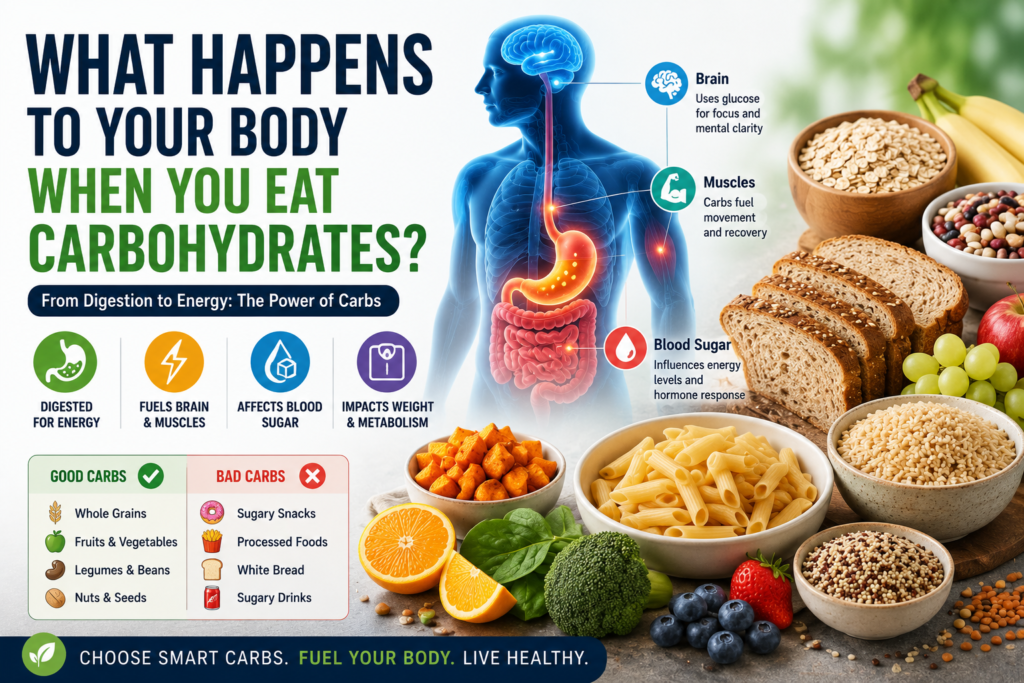
However, on a more detailed level, how do carbohydrates function? And what exactly takes place in your body when you eat them?
In this article, we’ll cover:
✔ How your body processes carbohydrates
✔ The difference between simple and complex carbs
✔ How carbs affect blood sugar and metabolism
✔ The role of carbs in weight loss and muscle building
What Are Carbohydrates?
They (or carbs) are one of the three main macronutrients, along with proteins and
fats. They are found in foods like:
Bread, rice, and pasta
Fruits and vegetables
Dairy products
Sugary snacks and sweets
Types of Carbohydrates
There are two main types of carbohydrates:
| Type | Example Foods | How It Affects Your Body |
| Simple Carbohydrates | White bread, candy, fruit juice, soda | Quickly digested, causes blood sugar spikes |
| Complex Carbohydrates | Whole grains, beans, vegetables | Slowly digested, provides long-lasting energy |
Step-by-Step: What Happens When You Eat Carbohydrates?
Step 1: Digestion Begins in the Mouth
Immediately after you eat something, your body starts converting carbohydrates into energy. Salivary amylase,
a catalyst in your saliva, is the one to start the process of converting starches to simple sugars.
🔹 Example: Like when you are chewing a piece of bread, it might become a little sweet because of the saliva that breaks it into sugars!
Step 2: Digesting Carbs in the Stomach and Small Intestine
The moment the nutrients get swallowed, carbohydrates navigate to the stomach and small intestine. Here, special digestive enzymes work further to break them down into glucose—the main fuel for the body.
The small intestine takes the glucose in from the bloodstream, where it is then distributed to cells, which use it for energy.
Step 3: The Role of Insulin and Blood Sugar
When the blood sugar level rises in the bloodstream, it signifies that the body is taking in the glucose by using blood sugar levels. This sends off the pancreas to shoot out insulin, a hormone which assists the glucose to enter the cells of the body.
✅ Whenever you digest complex carbs, the glucose moves into the bloodstream gently, causing the pancreas to secrete insulin slowly.
❌ In the opposite case, if you consume simple carbs, the glucose will be absorbed rapidly, thus a sudden blood sugar spike, then a fade starts that leads to fatigue and hunger.
🔹 Example: Doughnut can immediately increase your energy but may
also lead drastically to a significant decline in your stamina later on. On the contrary, the unrefined grains sustain our metabolism and keep the body full and energized for a longer time.
Step 4: How Carbs Provide Energy
Once glucose has penetrated cells, it has no option but to transform into ATP (adenosine triphosphate) which is the body’s current money. ATP serves the following things:
Brain function (thinking, memory, focus)
Muscle movement (walking, running, lifting weights)
Organ function (heartbeat, digestion, breathing)
What Happens When You Eat Too Many Carbs?
When your body receives more carbohydrates than it is necessary for, it has two alternatives:
✔ Hold it as glycogen (short-term energy storage in the liver and muscles)
✔ Convert it into fat (long-term storage if glycogen stores are full)
Carbs and Weight Gain
❌ Eating too many simple carbs (like sugary snacks and white bread) can lead to weight gain, because the surplus of glucose will be accumulated as body fat.
✅ Selecting fiber-rich complex carbs (like whole grains and vegetables) helps regulate hunger and avoids overeating.
Are Carbs Good or Bad?
Not all carbs are created equal!
✔ Healthy Carbs: Whole grains, vegetables, legumes, fruits, nuts
❌ Unhealthy Carbs: Sugary drinks, processed snacks, white bread
How to Choose the Right Carbs
| Healthy Carbs ✅ | Unhealthy Carbs ❌ |
| Whole grains (brown rice, oats) | White bread, pastries |
| Leafy greens (spinach, kale) | Sugary cereals |
| Beans, lentils, chickpeas | Soft drinks, candy |
| Berries, apples, oranges | Fruit juice (without fiber) |
How Carbs Affect Different Parts of the Body
Brain: Carbs and Mental Performance
Your brain uses carbohydrates as a main source of glucose. A low-carb diet may cause brain fog, fatigue, and difficulty concentrating.
🔹 Example: If you don’t eat breakfast, you may feel sluggish since your brain doesn’t have enough glucose.
Muscles: Carbs and Exercise Performance
Carbs are very important for athletic people and individuals who are physically active. They:
Prevent muscle fatigue
Improve endurance
Help in post-workout recovery
🔹 Example: Eating a banana before a workout gives you a quick energy boost that whole grains can provide you with if eating them provides you with long-term energy.
Blood Sugar: The Impact of Carbs on Diabetes
Diabetes patients are those
who are required to be extra cautious with the amount of carbohydrates they take. High-glycemic carbs make
blood glucose rise, whereas low-glycemic carbs help to keep blood sugar levels stable.
✅ Good carbs for diabetics: Whole grains, vegetables, nuts
❌ Bad carbs for diabetics: White rice, sugary drinks, processed snacks
How Many Carbs Do You Need Per Day?
The Recommended Daily Intake (RDI) of carbohydrates depends on age, activity level, and health goals.
| Activity Level | Carbohydrate Intake |
| Sedentary | 130g per day |
| Active (exercises 3-5x per week) | 225-325g per day |
| Athletes & Bodybuilders | 400-600g per day |
🔹 Example: A moderately active adult should aim for 45-65% of daily calories from carbohydrates.
Key Takeaways
✔ Carbohydrates help the body with energy, which is important for the brain, muscles, and organs.
✔ The quick predominate blood sugar increase originated from simple carbohydrates, whereas the gradual, stable one can be initiated by consumption of complex carbohydrates
✔ The extra is then stored in the body in the form of fat if the intake is more than what is required for energy.
✔ Healthy carb choices are such items (whole grains, vegetables, legumes) which are positive for weight loss and blood sugar levels.
[…] Carbohydrates are the three macronutrients necessary for the proper human body operating together with proteins and fats. They are the main energy source of the human body, which is used to power all activities, from simple daily schedules to strenuous workout sessions. […]