
Carbohydrates are one of the body’s main sources of energy. The traditional terms “simple” and “complex” carbohydrates describe their chemical structure, but for nutrition, the food’s overall quality, fiber content, and degree of processing are often more useful than the simple/complex label alone (Holesh et al., 2023).
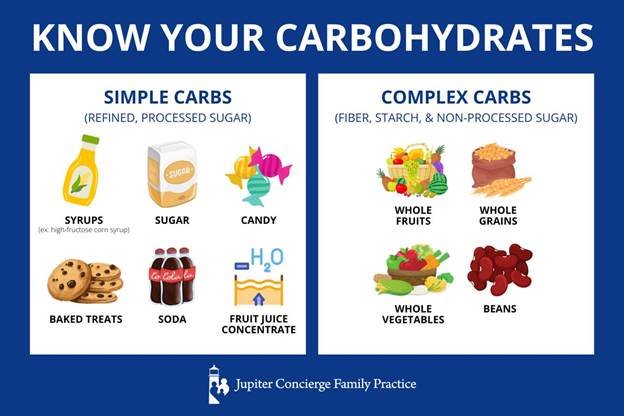
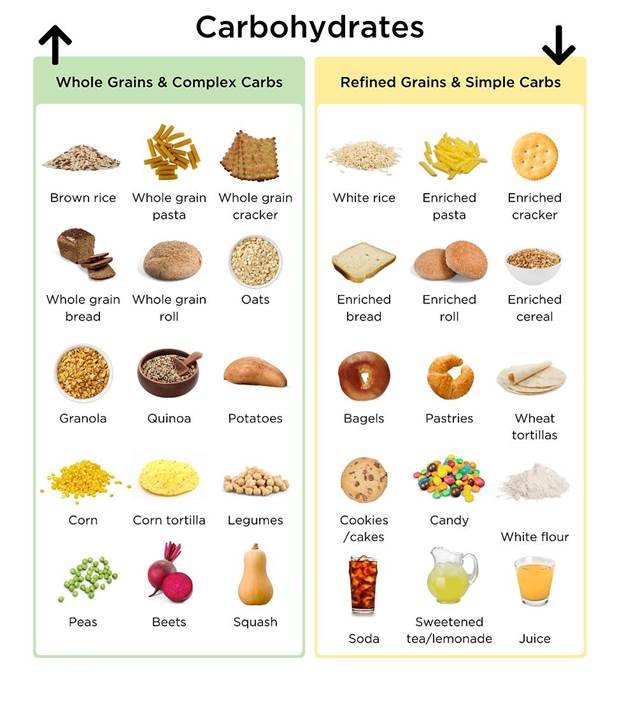
Simple vs. Complex Carbohydrates
| Feature | Simple Carbohydrates | Complex Carbohydrates |
| Basic structure | One or two sugar units | Three or more linked sugar units |
| Main forms | Monosaccharides and disaccharides | Starches and fiber |
| Digestion | Often digested relatively quickly | Often digested more slowly, particularly when fiber-rich and minimally processed |
| Fiber | May contain little or no fiber, especially refined foods | Many whole-food sources are rich in fiber |
| Examples | Table sugar, candy, sugary drinks, syrups | Oats, barley, beans, lentils, brown rice, quinoa |
| Natural sources | Fruit and milk also contain naturally occurring simple sugars | Whole grains, legumes, vegetables and some fruits |
| Blood-glucose effect | Can produce a rapid rise, depending on the food | Often produces a more gradual rise when minimally processed and high in fiber |
| Nutritional value | Highly processed sources may provide few nutrients beyond energy | Whole-food sources can provide fiber, vitamins, minerals and other plant compounds |
Important: “Simple” does not automatically mean unhealthy, and “complex” does not automatically mean healthy. For example, whole fruit contains simple sugars but also provides fiber and nutrients. Conversely, some refined starches are chemically complex but can be rapidly digested (Arts, 2025).
🍎 Simple carbohydrates
Simple carbohydrates contain one or two sugar units. Examples include glucose, fructose and sucrose (Asatkar & Basak, 2023). They occur naturally in foods such as fruits and milk, but are also found in added sugars, sweets and sugar-sweetened beverages.
Examples:
- 🍎 Whole fruit
- 🥛 Milk
- 🍯 Honey
- 🍬 Candy
- 🥤 Soft drinks
- 🍰 Cakes and sweets
The key difference is the food package. An apple contains naturally occurring sugar together with fiber and other nutrients, whereas a sugary drink can provide rapidly absorbed carbohydrate with little fiber.
🌾 Complex carbohydrates
Complex carbohydrates include starches and fiber. Whole grains and legumes are particularly useful sources because they can provide carbohydrate together with fiber, vitamins, minerals and other beneficial compounds.
Examples:
- 🥣 Oats
- 🌾 Barley
- 🍚 Brown rice
- 🌱 Lentils
- 🫘 Beans
- 🌾 Quinoa
- 🥔 Potatoes
- 🌽 Corn
However, processing matters. White bread, white rice and other refined grain products can technically contain complex carbohydrates because they contain starch, yet they may be digested relatively quickly because much of the fiber-rich grain structure has been removed.
The Bigger Picture: Carbohydrate Quality
Rather than simply asking “simple or complex?”, consider these questions:
1. Is it whole or highly processed?
Whole or minimally processed foods generally retain more of the grain’s natural structure and nutrients.
2. How much fiber does it contain?
Fiber is a carbohydrate that isn’t digested into glucose and can help slow digestion and support blood-sugar regulation.
3. Does it contain added sugar?
A whole-grain food with little added sugar is different nutritionally from a highly processed product containing refined flour and added sugars.
4. How does it affect blood glucose?
Glycemic index (GI) provides another way of considering carbohydrate-containing foods. Processing, particle size, fiber, ripeness and the presence of fat or acid can all influence the blood-glucose response.
Simple takeaway
Choose carbohydrates based on food quality, not just whether they are “simple” or “complex.” (Campos et al., 2022)
For everyday eating, emphasize vegetables, whole fruits, beans and lentils, and minimally processed whole grains such as oats, barley, quinoa and brown rice, while limiting highly processed refined carbohydrates and sugary drinks.
References:
Arts, C. (2025). Carbohydrate basics: sugars, starches and fibers in foods and health. Culinary nutrition: the science and practice of healthy cooking, 173.
Asatkar, A. K., & Basak, R. K. (2023). Carbohydrate: introduction and fundamentals. In Handbook of biomolecules (pp. 25-55). Elsevier.
Campos, V., Tappy, L., Bally, L., Sievenpiper, J. L., & Lê, K.-A. (2022). Importance of carbohydrate quality: what does it mean and how to measure it? The Journal of nutrition, 152(5), 1200-1206.
Holesh, J. E., Aslam, S., & Martin, A. (2023). Physiology, carbohydrates. In StatPearls [Internet]. StatPearls Publishing.
[…] Related reading: Simple vs Complex Carbohydrates: What’s the Difference? […]